Mathebe Ngwenya (Beauty on TApp): Redefining South Africa's Beauty Industry
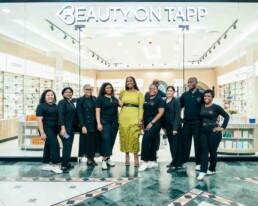
South Africa’s beauty landscape is changing — and at the centre of that shift is Mathebe Ngwenya, the founder and CEO of Beauty on TApp. What started as a digital platform connecting customers to beauty services has become a purpose-led retail brand with a loyal community, a thriving e-commerce engine and five physical stores shaping how South Africans discover and experience beauty.
But behind the growth is a deeper story: one about discipline, creative identity, leadership, and the pressure that comes with stepping into the role of CEO while building something that matters.
https://youtu.be/Xc3mvDlqtZQ?si=Rbwb2uVGwMconYpy
From Founder to CEO: When the Title Changes, Everything Changes
One of the most powerful reflections in this episode comes when Mathebe talks about removing “founder” from her email signature.
“Founder felt like forgiveness for mistakes because I was still learning. CEO made me accountable. It made me the person people run to.”
That shift — from building alone to leading at scale — is one every growing entrepreneur eventually faces.
It’s not just a title change. It’s an identity shift.
A mindset shift.
A responsibility shift.
And it’s the kind of lesson that doesn’t show up in business books — but shows up in real life, on the days when the business needs more from you than inspiration.
Scaling with Intention: From Online to Five Stores
Beauty on TApp’s expansion into physical retail is one of South Africa’s most exciting entrepreneurial journeys.
What started online — built through consistency, community, and deep understanding of the market — is now meeting customers where they are: in malls, in walk-in experiences, and in real-time moments of discovery.
Moving from screens to storefronts introduced new pressures:
-
Real-time customer expectations
-
Stock control in physical spaces
-
Hiring, empowering and trusting a growing team
-
Building a brand customers can see, touch, ask, and experience
For Mathebe, physical retail wasn’t just about scale — it was about community.
About turning digital trust into in-person connection.
About proving that homegrown brands can deliver world-class experiences.
Corporate Experience Matters — More Than We Admit
A big part of Mathebe’s journey is shaped by her years in corporate finance.
She talks openly about how structure, process, discipline and analytical thinking still guide how she builds today.
It didn’t limit her entrepreneurship — it sharpened it.
Corporate taught her to think long-term, make informed decisions, manage risk, and hold herself to a high standard — lessons she uses every day as a CEO.
Her story is a reminder that your past isn’t wasted.
Every chapter prepares you for the next one.
Creativity, Leadership and the Future of Beauty on TApp
In one of the most honest moments of the conversation, Mathebe reveals that she has been questioning whether she wants to remain CEO — not because she is stepping back, but because she has grown into a deeper understanding of herself.
“I think I want to be a creative director. I’m learning that my contribution might be bigger there.”
It’s rare to hear founders speak openly about shifting roles.
But leadership is also knowing where you create the most value.
And giving yourself permission to evolve.
Why This Story Matters
Mathebe Ngwenya’s journey isn’t just a story about beauty products or business milestones.
It’s a lesson in purpose, conviction and building community through consistency.
It’s a reminder that:
-
Growth demands new versions of us
-
Purpose is a strategy
-
Leadership is a choice
-
And global-standard brands can be built here, at home
This episode is for every South African entrepreneur learning to scale, trying to trust their team, and finding their place inside the business they built.

The Business of Purpose: How Legends Barber Built 10 Years of Impact
What does it take to build a business that lasts a decade, employs hundreds, and becomes part of the fabric of communities across South Africa?
For Sheldon Tatchell, founder and CEO of Legends Barber, the answer has always been simple: purpose, people, and staying rooted in the work.
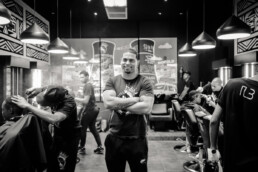
From a single chair in Eldorado Park to over 70 stores, an 800+ strong team, and more than 10 years of community impact, Sheldon’s journey is one of South Africa’s most powerful entrepreneurship stories — and a reminder that big things often begin in small places.
https://youtu.be/vL-hBUmJQTE?si=jVPIM7F7CbBbyA61
In this episode of the Mashstartup Podcast, we unpack the real work behind building Legends Barber into one of Africa’s most recognised grooming brands.
Starting With One Chair and a Calling
Most empires begin quietly. For Sheldon, it started with cutting hair as a teenager — long before he had the language for entrepreneurship.
He wasn’t chasing a title or a trend. He simply followed what came naturally:
Serve people. Honour the craft. Keep showing up.
That grounding is what carried him through the early setbacks — including his first shop closing while he was away on honeymoon. Instead of quitting, he bought a scooter and began doing house calls, often travelling long distances just to keep his clients happy.
Those years built the muscle he would later rely on when the brand began to scale.
Building a Business Anchored in Purpose
A defining part of Sheldon’s story is how his faith shapes his approach to leadership. He often references Colossians 3:23 — “Whatever you do, work at it with all your heart.”
Purpose isn’t a slogan in this story — it’s the operating system.
It shows up in how Legends Barber trains barbers, how they treat customers, and how they show up in communities. And you see it clearly in the way the business has expanded without losing its heart.
Scaling Without Losing the Personal Touch
Growing from one chair to dozens of stores across South Africa, Botswana, and Lesotho requires systems, discipline, and a deep respect for the customer experience.
Sheldon breaks down how Legends Barber managed to scale while still feeling local, personal, and grounded — something many businesses lose once growth kicks in.
The secret?
People-first systems, not shortcuts.
-
Consistent training
-
Clear cultural values
-
A community-driven approach
-
Leadership that stays close to the ground
As Sheldon puts it, “People come for the cut, but they return because of how you make them feel.”
10+ Years of Impact Through Skills and Opportunity
One of the most inspiring parts of Legends Barber’s journey is the Legends Training & Development Centre — an initiative that trains and equips young barbers with skills, business knowledge, and the chance to earn a living.
The centre now creates over 200 jobs a year, giving young people a pathway into a growing industry. It’s entrepreneurship turned into opportunity — the kind that leaves lasting footprints in communities.
This is what purpose in business looks like in real life.
Lessons for Every South African Entrepreneur
Sheldon’s journey offers a blueprint that any founder can learn from:
1. Start where you are — even if it’s just one chair.
The conditions don’t have to be perfect for the dream to begin.
2. Purpose will carry you further than profit.
When the work is aligned with who you are, resilience becomes a natural part of the journey.
3. Growth that lasts is built on people.
Your team, your customers, your community — that’s where longevity lives.
4. Turn every setback into a building block.
The scooter years, the shutdowns, the setbacks — they laid the foundation for a continental brand.
Listen to the Full Conversation
This episode is a powerful reminder that real entrepreneurship is human work — and that purpose is still one of the strongest competitive advantages you can build with.

Reimagining STEM: How AfriCAN Code Is Transforming Learning for the Next Generation
Some businesses are born from opportunity. Others are born from frustration.
AfriCAN Code was born from both.
Long before it became an edtech company with continental ambition, AfriCAN Code started as a simple question: Why are so many learners switched off in maths and science?
When Tshegofatso Dludla and her husband were tutoring high school students, the pattern became obvious. The kids weren’t struggling because they lacked ability — they were struggling because the subjects felt abstract, disconnected, and outdated. The system wasn’t designed to help them see maths and science come alive.
Instead of accepting that reality, she built a new one.
https://youtu.be/i6SN6mUVlHw?si=iYasY9poxbHEx6xO
From Frustration to a Framework for Change
The first step was the Tshala Foundation, an NPO using coding and robotics to make learning engaging. But sustaining impact through donor cycles is tough — especially when the need is urgent and the vision is big.
So Tshego made a bold shift: move from NPO to startup.
That’s how AfriCAN Code was born — a for-profit edtech company with a social mission baked in.
Not a pivot. A strategy.
Making STEM Make Sense
AfriCAN Code doesn’t approach STEM as a list of subjects. It treats it like a language — something kids must experience, play with, and shape for themselves.
Through hands-on coding, robotics and project-based learning, AfriCAN Code is helping African kids:
-
understand maths and science through real-world problem solving
-
build confidence through creativity and experimentation
-
see tech not as something imported, but something they can make, design, and lead
It’s STEM that looks like them, sounds like them, and grows with them.
A Proudly African Edtech on the Rise
The company is now building its own educational tools, apps, and curriculum — designed in South Africa, for African classrooms.
And behind that innovation is something rare: a team of Black female tech developers shaping the future of learning with intention and cultural context.
This shift from RoboSTEAM Train to AfriCAN Code isn’t just a name change.
It’s an evolution — a claim that African kids deserve world-class education, powered by world-class solutions built on home soil.
The Grind Behind the Mission
Building in the education space isn’t glamorous. It requires resilience, patience with policy, and a willingness to knock on doors that don’t always open.
Tshego’s journey reflects what so many founders know:
impact is built brick by brick, lesson by lesson, day by day.
Yet the wins are powerful — watching learners light up when they build something themselves, or hearing teachers talk about how coding suddenly makes maths make sense. Those moments keep AfriCAN Code moving forward.
A Story of Purpose, Persistence & Possibility
AfriCAN Code is not just teaching kids how to code.
It’s teaching them how to imagine. How to problem-solve. How to build.
It’s shifting the narrative from “African kids need to catch up” to “African kids are ready to lead.”
This is the story of a founder who saw a broken system and decided to build something better — not tomorrow, not someday, but now.
How Purpose, Community & Bulk Buying Power Are Rewriting the Township Economy — The Vuleka Story with Brian Makwaiba
South Africa’s township economy moves over R10 billion worth of goods every year. It’s one of the most vibrant, misunderstood, and under-supported parts of our country’s entrepreneurship landscape. And at the heart of it all sits the spaza shop — a business that has kept families going, communities fed, and local economies alive for generations.
https://youtu.be/x6wC-kE2hds?si=0IToF7sBaAXWNVyT
But there’s a problem:
Most of these businesses buy stock at higher prices than big retailers, struggle to access credit, and don’t have the data they need to grow. The result? Hard-working entrepreneurs who know their customers better than anyone are held back by systems never designed for them.
That’s where Vuleka comes in.
A Platform Built With Purpose at the Centre
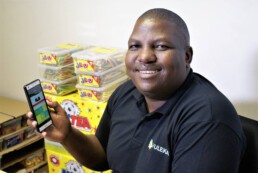
On this week’s episode of the Mashstartup Podcast, host Mashudu Modau sits down with Brian Makwaiba, founder of Vuleka — a multi-award-winning ecommerce and fintech platform built for the informal market.
Brian’s story is one rooted in purpose. Growing up in Khayelitsha and working closely with township businesses, he saw a simple truth:
Spaza shop owners don’t lack ambition or business knowledge — they lack access.
Vuleka was built to change that.
What Vuleka Actually Does
The platform gives township entrepreneurs the tools and support they’ve been denied for too long:
-
Bulk buying at fair prices
-
Real-time market data
-
Credit profiles for unbanked traders
-
A hybrid online-offline ordering system run by local youth agents
It’s not an app thrown into the township economy from the outside. It’s a system built with community, trust and practical insight — the things that actually make businesses work on the ground.
The Power of Agility in Township Businesses
One of the most powerful insights from the conversation is this:
Township entrepreneurs understand their customers better than anyone.
They know what sells, when it sells, and how to adapt. They are agile by necessity — long before “agile” became a business buzzword.
What they don’t have is the infrastructure and support to turn that agility into sustainable growth.
That’s the gap Vuleka is filling.
Designing Fintech for Real People
Brian and his team intentionally designed Vuleka to work for business owners who may not be tech-savvy. Through local youth marketers, offline ordering options, and accessible pricing, the platform meets spaza shop owners where they are — not where Silicon Valley thinks they should be.
This is purpose-driven innovation:
technology that bends to the realities of the people it aims to serve.
Why the Township Economy Is One of SA’s Biggest Opportunities
If spaza shops can buy together, grow together, and access credit together — the impact on township economies becomes explosive. Jobs, better margins, stronger communities, and real economic power.
Brian believes, and Mashstartup echoes this belief, that the township economy isn’t a “side hustle economy.” It’s a sleeping giant.
And platforms like Vuleka are waking it up.
Listen to the Full Conversation
If you’re building for South Africa, working in fintech, or simply passionate about community-driven business — this conversation will stay with you.

Building Inclusion, Empathy, and the Future of Mental Health with Onkgopotse Khumalo (Amari Health)
https://youtu.be/iSy6wsyr4SY?si=lmmUhEb63-0rIFoS
What does it take to turn a deeply personal struggle into a Pan-African healthtech startup that’s reimagining how we access mental healthcare? In this episode, I sit down with Onkgopotse Khumalo, founder of Amari Health, to unpack her journey from the world of finance and consulting to building one of South Africa’s most intentional healthtech startups. After losing a close friend to suicide and navigating her own search for support, she set out to create a platform that makes mental healthcare more affordable, inclusive, and culturally relevant. We dive into the lessons of building with purpose, the complexity of tackling taboo issues in African communities, and the balance between AI-driven technology and deeply human empathy. Onkgopotse opens up about the influence of her mother’s entrepreneurial journey, the realities of raising capital as a black woman founder, and the vision behind Amari: a Pan-African platform where mental wellness is accessible to all. This is a story about more than healthtech. It’s about resilience, cultural sensitivity, and the heart it takes to build solutions that carry both personal and societal weight. If you care about the future of African entrepreneurship, the role of technology in solving real problems, and the fight to make mental healthcare accessible for everyone — this is a conversation you don’t want to miss.

Wings, Culture, Community: The Rise of The Wing Republic with Tlhompho Mokoena
https://youtu.be/nVP3E2hZ6eE?si=mGQxXcBSmllx4axl
Some brands are born to be more than just businesses—they become cultural icons. The Wing Republic, founded by Tlhompho Mokoena, has spent over a decade proving exactly that. What started in 2014 as a single pop-up stand has grown into one of Gauteng’s most recognized food brands. From the early hustle at festivals and food markets to a brick-and-mortar home in the heart of Braamfontein, The Wing Republic has carved its place as South Africa’s original wing specialist. Along the way, it has brought people together at events like Black Coffee’s Block Party, Delicious Festival, and Sneakers Exchange—becoming as much about culture and community as it is about food. In this episode, Tlhompho shares the real story behind that journey. He speaks openly about the patience required to build a business that lasts, the resilience it takes to weather rising costs and industry challenges, and why brand is the strongest currency any entrepreneur can invest in. At its core, The Wing Republic is about more than wings. It’s about creating experiences—bold flavors, a neighborhood atmosphere, and a sense of belonging that keeps people coming back. With a vision to expand beyond Gauteng through both pop-ups and permanent spaces, Tlhompho is building not just a restaurant, but a movement around excellence, culture, and possibility. 🎧 Tune in to hear how The Wing Republic went from gazebo to icon, and what every South African entrepreneur can learn about staying the course, scaling with purpose, and building a brand that truly matters.

Building Access, Community, and the Future of South African Tech with Ntsako Mgiba (Darkies in Tech)
https://youtu.be/o_PCimAGV3Y?si=ApK8yRdvNdH26KEe
What does it take to build real power for Black founders in South Africa’s tech ecosystem — and create a future where professionals of colour have equitable access to knowledge, networks, and funding? In this episode, I sit down with Ntsako Mgiba, founder of Darkies in Tech — the country’s largest vetted community of Black founders, investors, and ecosystem builders — to unpack the journey from a single WhatsApp group to a thriving platform reshaping the future of African innovation. We dive into the launch of the new Darkies in Tech platform, the game-changing partnership with Gijima, and why their mission goes beyond representation — to building a diverse, inclusive tech ecosystem that truly reflects South Africa’s rich demographic diversity. Ntsako shares the hard lessons of building with purpose, the values guiding his leadership — from giving value before you take it, to engaging authentically and learning together — and what the next generation needs to do to not just survive, but own the future of African tech. If you care about the future of African innovation and the role of community as infrastructure, this is a conversation you can’t afford to miss.

Building Trust, Scaling Impact: How Thato Schermer Is Shaping the Future of Women’s Health
https://youtu.be/xyNlFJVvCOY?si=OwT_D9W5tHmK0lwa
In South Africa and across the continent, millions of women still face healthcare that is expensive, fragmented, and impersonal. For far too long, care has been treated as a service, not a relationship. And when the system fails, it’s community — not institutions — that women turn to for support. Zoie Health was born in that gap. Built from lived experience and guided by community insight, Zoie is a digital health platform on a mission to redesign access to care. It’s not just about virtual consultations or medication delivery — it’s about building a system rooted in trust, dignity, and humanity. At the centre of this vision is Thato Schermer — a founder who isn’t just chasing growth, she’s solving for care at scale. She’s proving that you can lead with empathy, build with purpose, and still move with urgency. In this episode, we unpack how Thato and her team are turning pain into product, story into structure, and community into infrastructure — one decision at a time. Because real innovation isn’t just about technology. It’s about who you're building for — and who you're building with.

The Human Work of Entrepreneurship: Ian Calvert on Building with Impact(Further)
https://youtu.be/Bd-lNQT-kpc?si=JdnFt4jzT5MIACgR
This episode is a deep dive into what it really takes to build ventures that last — and why starting with the human being behind the idea is the most powerful form of entrepreneurship. Ian Calvert, co-founder of FURTHER and former Global Project Leader at Red Bull Amaphiko, joins us to explore why personal growth, resilience, and purpose should come before traction, funding, or scale. For nearly a decade, Ian and the FURTHER team have been reshaping how we support entrepreneurs in South Africa. Rather than treating founders like pitch decks with legs, they invest in the person — helping them develop the mindset, networks, and inner capacity needed to create sustainable businesses that make real impact. We unpack: Why building humans first leads to stronger businesses and stronger communities How FURTHER’s unique approach blends storytelling, wellbeing, and performance coaching The launch of THE GREENHOUSE, a bold partnership with the Nedbank Foundation to grow South Africa’s next generation of green economy innovators What social enterprises like Kusini Water teach us about scaling impact sustainably Why the future of entrepreneurship requires more focus on purpose, less on hype 💡 This episode is a call to rethink how we nurture South Africa’s next generation of builders — and a reminder that if we want lasting impact, we have to start with the people creating it.

Media, Community & Africa’s Startup Story with Andile Masuku, Co-Founder of African Tech Roundup
https://youtu.be/d81FlBctBD0?si=vSemB2WfZR0bhamn
What if the real power in Africa’s startup ecosystem isn’t capital — but control of the narrative? In this episode, we dive deep into how stories are told, who gets to tell them, and what gets left out. Andile Masuku joins us to unpack the tension between media, community, and innovation — and why reclaiming the narrative is essential if we want an ecosystem that serves people, not just platforms. We explore: • Why African Tech Roundup chose depth over scale • How “community” became a buzzword — and how to reclaim its meaning • The media’s role in either amplifying hype or holding power to account • The uncomfortable but necessary work of building with integrity 💡 A must-listen for anyone serious about building African innovation with purpose and truth.